Scam and phishing emails (online fraud messages) pretend to come from Loopia or other companies to get hold of your personal details or money. The warning signs below help you recognise them.
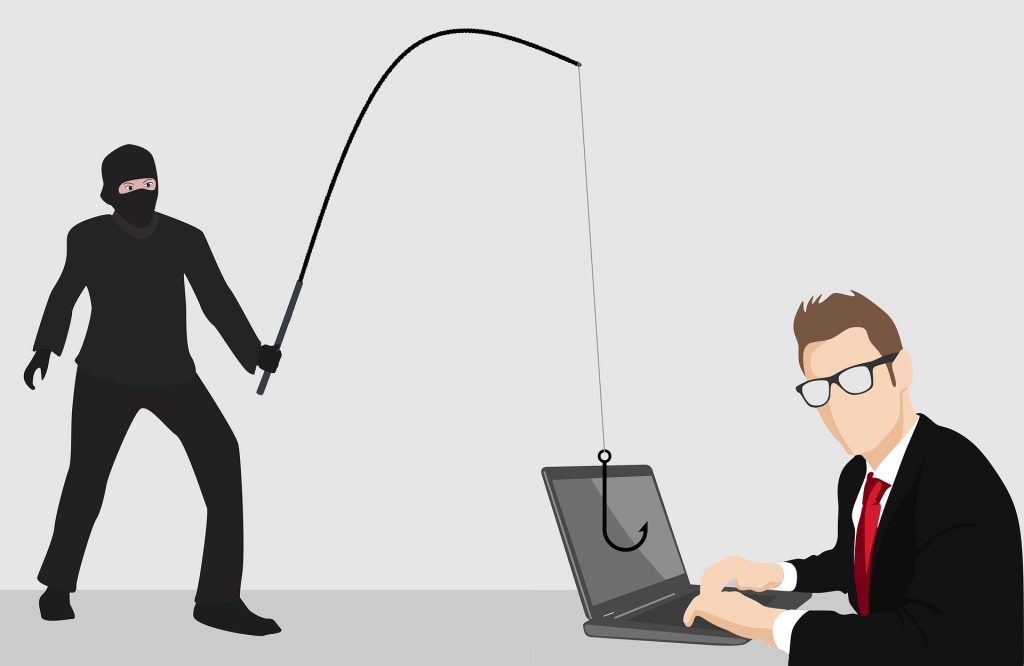
Sending an email while pretending to be someone else — a person or a company — is called phishing. The sender is “fishing” for personal or financial information so they can profit at your expense.
It can be difficult to tell at a glance whether an email is legitimate or an attempt to exploit you. That is exactly what makes phishing so hard for us and other companies in the industry to stop before it reaches you. We do everything we can to prevent these messages, but some still slip through.
Below are the most common warning signs that an email is a scam.
Poor language and generic greetings
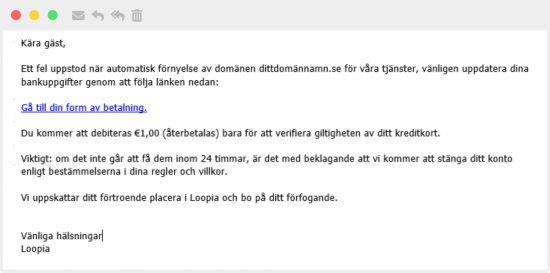
You can often spot a scam just by reading the message. Spelling and grammar mistakes are common, as are generic greetings such as Dear user or Dear customer. When Loopia needs to contact you personally, we always address the email to the contact specified on the account.
A “masked” sender address
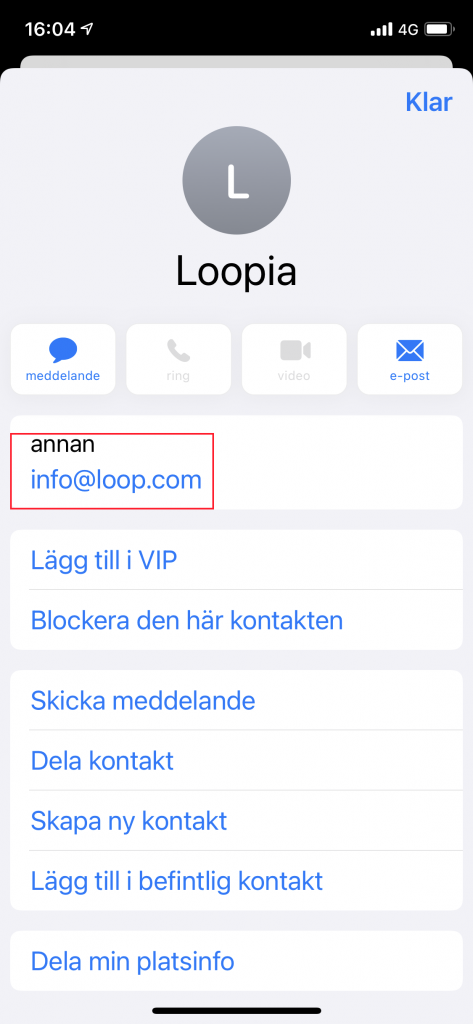
It is easy to assume you can trust the sender shown in the “From” field of an email, but it is not that simple. The sender name can be set to anything, while the actual email address may be completely different. A useful tip is to click on (or expand) the sender’s email address to see who the message really came from.
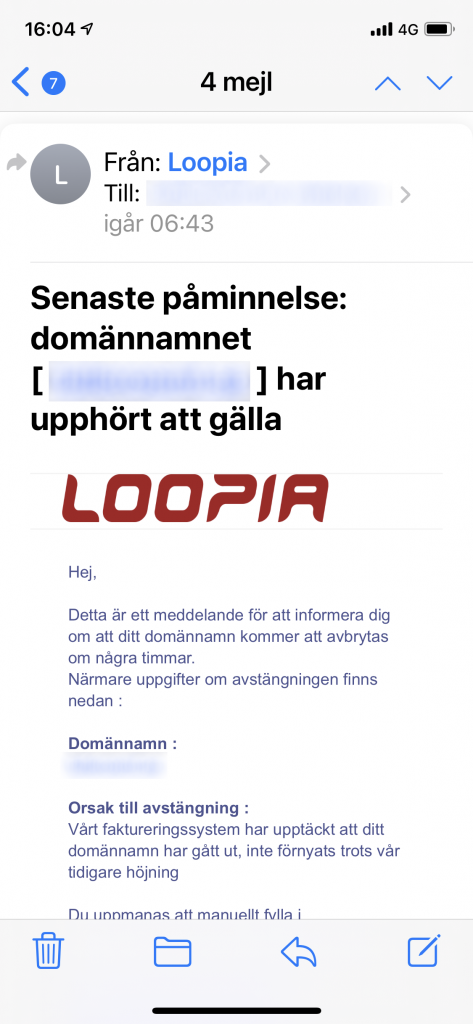
In the example below (viewed on a phone), the sender claims to be Loopia, but the email actually comes from a completely different domain (loop.com), which does not belong to us.
Attempts to scare or pressure you
Scam messages often claim that something serious has happened or is about to happen to your account — for example that your domain will be suspended, or that “our system” has detected a problem that does not exist. Of course, real problems do occur, but with a domain, you will always receive an invoice, a notice, a reminder and a further notice before it expires. We would never “shut down” a domain from one day to the next. We always keep you informed, and if you are unsure, you are welcome to contact us.
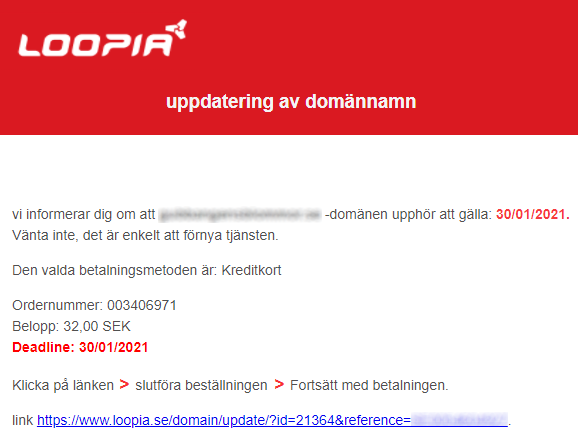
Never click on links you do not recognise
Almost every phishing message asks you to click a link and then enter information such as your Loopia login, credit card details or other personal data. A useful trick in most browsers (when reading email via webmail) and most email clients is to hover the mouse pointer over the link to preview where it leads. Scam links are often long and have nothing to do with Loopia.
“You have paid too much money — click here…”
Overpayments do happen sometimes, including at Loopia. What we would never do in that case is ask you to click a link to enter card details. If you had overpaid, we would either add the amount as a credit on your account (Loopia Prepaid) or contact you and ask you to reply with details of how you would like the refund processed. We would never ask you to click a link and enter account or card details to receive a refund.