If you have a domain with us configured as Website with Loopia > Unix, you can see which PHP modules are available on the server by creating your own .php file in your FTP space and visiting it in a browser.
The .php file should contain the following code:
<?php
phpinfo();
?>
Save the .php file with a suitable name, for example info.php, and upload it to the public_html folder for your domain, for example /example.com/public_html/.
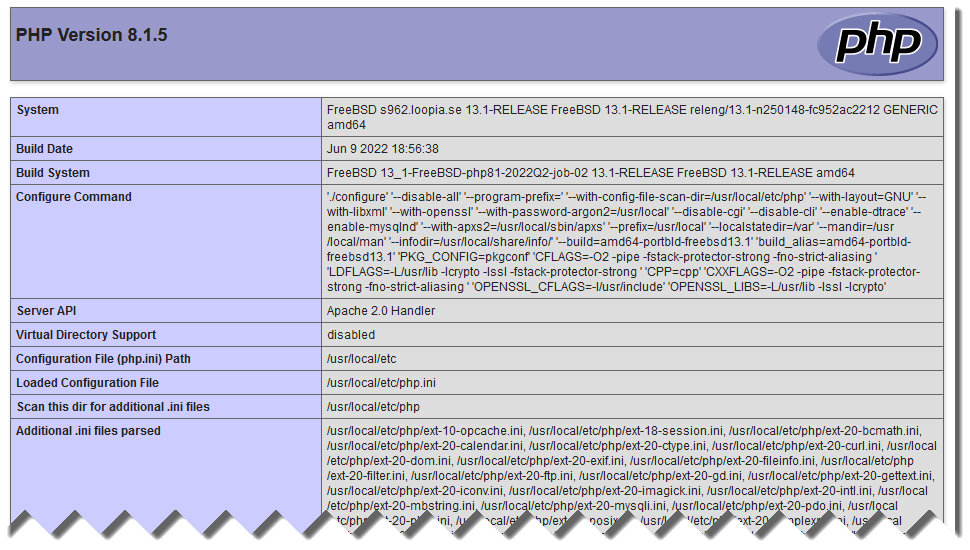
When you visit the file, which is then located at example.com/info.php, you will see a long list of information about PHP on the server where the file is located.
Below is an example of how it looked on a server running PHP 8.1 on 2022-08-11.
Please note that we do not install new PHP modules on the server on request.